





FHA Loans After Chapter 7 or Chapter 13 Bankruptcy
August 27, 2026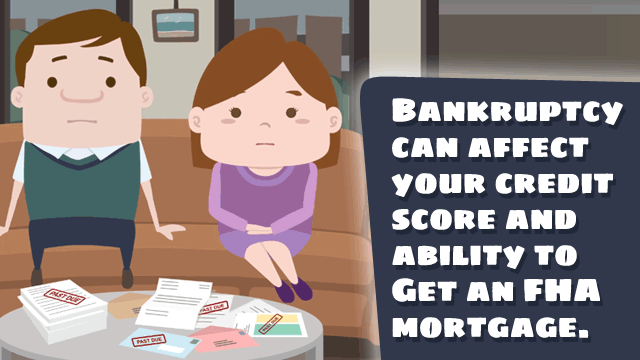
What do you need to know about getting an FHA mortgage after bankruptcy? One of the most important things to keep in mind is that the clock does NOT begin counting down your seasoning period when you file for bankruptcy, and that's a mistake some borrowers make when planning their return to credit use. We examine some key points below.
FHA Loan Post-Bankruptcy Guidelines
Department of Housing and Urban Development Handbook 4000.1 establishes the rules, mandatory seasoning periods, and credit-recovery standards that borrowers must meet to qualify. But that's not the only set of guidelines to follow; lender standards also apply.
How Long Must a Borrower Wait After a Chapter 7
The standard waiting period is 24-months starting from the court discharge date rather than the initial filing date. This is an important nuance that's easily overlooked by some. Don't mistake the discharge date for the filing date.
Lenders can shorten the timeline to 12 months if the borrower documents that the filing resulted from non-recurring circumstances beyond their control and proves on-time payments on all subsequent credit lines.
Getting an FHA Loan After Chapter 13
Borrowers become eligible during the repayment plan once they complete 12 months of on-time payments and receive permission from the bankruptcy judge.
Completing the plan and receiving a discharge carries no waiting period, whereas a court dismissal requires a 24-month wait from the dismissal date. When it's time to apply, special documents are required; FHA lenders will ask for the official bankruptcy petition, the schedule of creditors, and the discharge paperwork issued by the court clerk.
The lender must also do a new credit check, reviewing reports from all three credit bureaus to confirm that every discharged account reflects a zero balance.
An FHA loan officer will even go so far as to review your bank records or written landlord statements to confirm 12 to 24 months of on-time rental payments. After a bankruptcy, the burden of proof is on the applicant to show they have reestablished credit, have good credit habits, and are prepared to manage the new financial repsonsibilities they are applying to take on.
FHA Loan Articles
August 27, 2026Getting a home loan after a Chapter 7 or Chapter 13 bankruptcy isn't easy, but it is possible, thanks to FHA loan rules found in HUD 4000.1. Typically, you'll need to wait out a minimum time called a seasoning period before you're allowed to apply for new credit, and FHA loan rules say the lender must review your new credit established in the meantime as a condition of loan approval. What do you need to know about getting an FHA mortgage after bankruptcy?
August 24, 2026A reverse mortgage lets homeowners age 62 or older, with or without heirs, cash out their home equity without taking on a monthly mortgage payment. The FHA Home Equity Conversion Mortgage lets qualifying borrowers take equity in cash with loan balance due only after the borrower dies, moves out, or sells the house. Is this type of loan right for someone who has no heirs to inherit the home?
August 19, 2026Homebuyers who have enough cash for a down payment still need to consider their full financial picture before choosing between a conventional mortgage and an FHA loan. Having cash on hand changes the math for both options, but savings alone won't make a conventional loan the automatic winner. Credit scores, current debt, and the type of property you want to buy all determine which loan will cost less over time.
August 11, 2026Homeowners with FHA adjustable-rate loans need to track their loans more closely. That is because FHA ARM loans start with introductory interest rates that eventually expire and are subject to change afterwards based on market rates. When interest rates rise, monthly housing payments climb on ARM loans, pushing many homeowners to consider refinancing into a fixed-rate mortgage.
August 10, 2026If you want to buy a home with an FHA mortgage, you must set up an escrow account to cover property taxes, homeowner insurance, and upfront closing expenses. While the FHA loan program has rules for funding these accounts, buyers often do not realize those rules can include approved and unallowed sources for escrow funds. What do you need to know before you set up and fund your escrow account for an FHA mortgage?