



FHA Loan Article Library
Mortgage Guidelines, Trends, and Updates for Borrowers

August 19, 2026Homebuyers who have enough cash for a down payment still need to consider their full financial picture before choosing between a conventional mortgage and an FHA loan. Having cash on hand changes the math for both options, but savings alone won't make a conventional loan the automatic winner. Credit scores, current debt, and the type of property you want to buy all determine which loan will cost less over time.
August 11, 2026Homeowners with FHA adjustable-rate loans need to track their loans more closely. That is because FHA ARM loans start with introductory interest rates that eventually expire and are subject to change afterwards based on market rates. When interest rates rise, monthly housing payments climb on ARM loans, pushing many homeowners to consider refinancing into a fixed-rate mortgage.
August 10, 2026If you want to buy a home with an FHA mortgage, you must set up an escrow account to cover property taxes, homeowner insurance, and upfront closing expenses. While the FHA loan program has rules for funding these accounts, buyers often do not realize those rules can include approved and unallowed sources for escrow funds. What do you need to know before you set up and fund your escrow account for an FHA mortgage?
August 3, 2026Buying a home in a high-cost area requires understanding how FHA loan limits shape your financing options. Does the house for sale have a price above the local FHA loan limit? You may need to explore your jumbo loan options. There are conventional jumbo loans and FHA versions. Which is right for you? Much depends on your financial needs, plans, and goals for the loan.
July 30, 2026There is a common misconception about FHA loans that only a first-time home buyer can use the program. This is not true; repeat buyers can qualify for an FHA loan, but why does this misconception exist? Partially because state and local programs have first-time buyer requirements for down payment and/or closing cost assistance programs. So while you do not need to be a first-time buyer to get an FHA loan, you may need to meet that definition to qualify for down payment help.
July 29, 2026When you buy a home with an FHA mortgage, you have an option to apply for a cash-out refinance to take equity in your home out in cash. These loans are offered to those with 80% equity in the home or better, and you can apply for this type of cash-out refinancing once you hit that 80% mark. Many choose to wait until their equity is much higher to achieve the best results, and it pays to factor in your closing expenses and lender fees when running the numbers to assess how affordable this option is given your budget and financial goals.
July 28, 2026FHA loan rules require escrow, and the funds used to fund escrow must come from approved sources. FHA loan rules require the lender to verify funds for earnest money or closing costs and will not allow sources such as payday loans, credit card cash advances, or non-collateralized loans. If you have never opened an escrow account before, there are some important details to know before you start.
July 20, 2026Escrow accounts play a central role in managing property taxes and insurance for FHA mortgages. Understanding escrow accounts is an important part of being a new home owner, especially if you have plans to refinance the property at some point and want to know your options to get out of escrow. We examine some key points here about revising and canceling escrow on an FHA mortgage.
July 18, 2026Many home purchasers hold incorrect assumptions about FHA mortgage rules and restrictions. These loans are not limited to first-time buyers, for example, and there is no age limit for FHA loans. FHA borrowers may apply for more than one FHA mortgage, but these loans are for owner-occupied residences only. We examine some important points on these issues, including when you can and cannot have more than one FHA loan at a time.
July 14, 2026Do you need to sign a mortgage remotely? Years after COVID, using an all-virtual closing for your FHA home loan is an option, depending on the nature of your transaction and other factors. The FHA and HUD both permit digital signatures on home loans, including initial applications, tax disclosures, and purchase agreements. Keep in mind that using the digital option requires cooperation among three entities: your mortgage company, the title insurance agency, and the local land recording office.
July 9, 2026The Closing Disclosure is provided by mortgage lenders at least three business days before you close the deal. The disclosure outlines loan terms, monthly installments, and the closing costs required to finalize the transaction and take the keys to your new home. Borrowers use the disclosure to cross-reference their final numbers against the initial Loan Estimate received during the early stages of the application. But what if there are errors?
July 5, 2026When you purchase a home with an FHA loan, the government backs the mortgage to protect lenders against default. In exchange for this, the FHA requires borrowers to pay a Mortgage Insurance Premium (MIP), which features two parts. One is the upfront fee paid at closing. The other is an annual premium, broken down into 12 monthly payments, added to your mortgage bill. We examine key issues related to canceling this mortgage insurance.
June 30, 2026FHA loans offer low down payment options and more forgiving credit requirements for borrowers who may not qualify for a conventional mortgage or need to save more money out of pocket at the front end of the mortgage. But even with more forgiving credit requirements, some borrowers are tempted to omit certain debt information from their home loan applications. What does it mean to conceal a debt or financial situation from your loan officer?
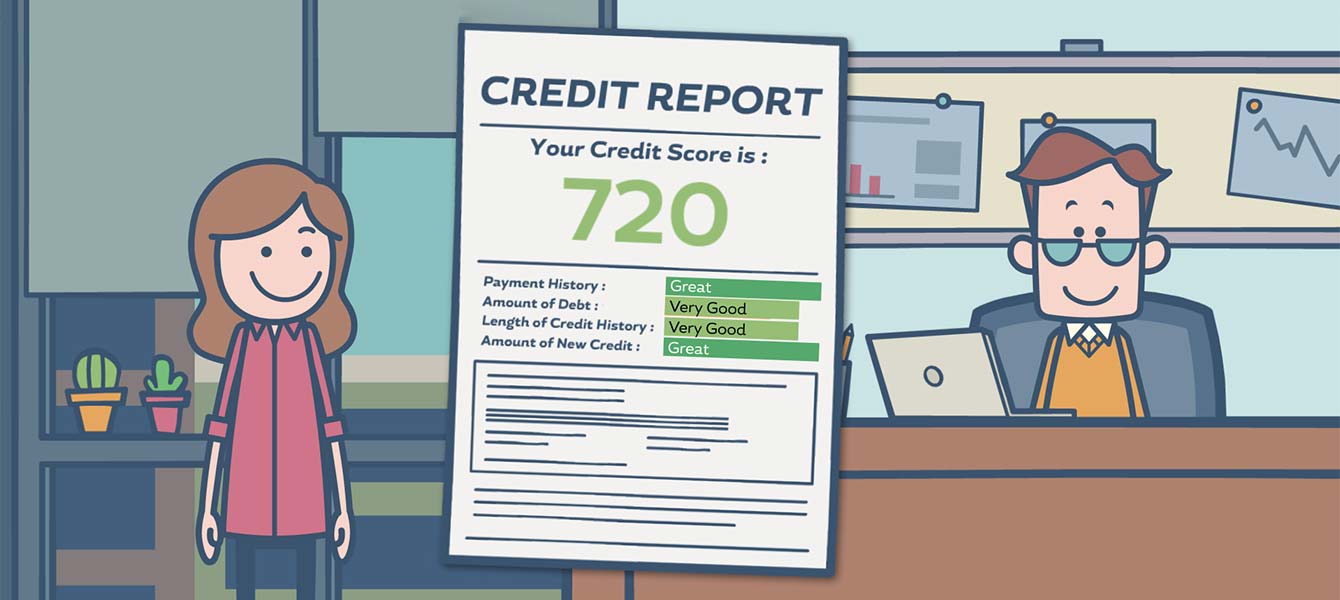
June 30, 2026Some borrowers start working on their credit scores but get impatient with the process because they can't predict when their efforts will change their FICO scores. How long does it take for your FICO scores to update when you pay off a loan, reduce your credit card balances, or take other steps to make yourself a better credit risk? The short answer is that credit reporting procedures are not standardized, and it may take more time than you realize to get those positive credit actions added to your credit report.
June 29, 2026Mortgage interest rates are "moving targets" shaped by national economic trends and the borrower's specific financial profile. What is your FHA loan interest rate? Much depends on the financial data you bring to the table. Lenders set interest rates daily based on a snapshot of market conditions, but the rate ultimately offered also reflects risk, equity, and the lending institution's internal operational costs.
June 28, 2026An FHA appraisal differs from a conventional appraisal. While the goal of a conventional appraisal centers on market value, the FHA appraisal also focuses on the buyer's safety and soundness. FHA lenders select the appraiser, not the home buyer.
June 24, 2026FHA loan closing costs vary by property price and geographic location, rather than by a single nationwide flat fee. Total settlement charges combine percentage-based fees, local government taxes, and marketplace service costs. If you are new to buying a home, you'll want to get familiar with the closing cost issues discussed here to avoid budgetary surprises later on.
June 12, 2026Primary borrowers may wish or need to remove a cosigner to establish financial independence and take sole ownership of a property due to divorce, separation, or other life changes. Many people get an FHA mortgage with a cosigner because their personal credit history or income is insufficient to qualify on their own.
June 10, 2026Many FHA borrowers bypass the adjustable-rate mortgage (ARM) option in favor of a fixed-rate loan. Borrowers who are new to these options often have questions about the differences between the two and why one may be a better choice than the other, depending on your circumstances and plans for the home beyond closing day.
June 5, 2026FHA loans require a minimum down payment of 3.5%, and in return, the federal government insures the mortgage against default. But not all applicants can come up with the down payment funds as readily as others. Some rely on down payment assistance to meet their down payment requirements, but the terms and conditions of these programs often include income limits and price caps on the property being purchased.
May 28, 2026It's easy to assume that for a government-backed mortgage loan like an FHA single-family home loan, a government worker sits at a desk in Washington reviewing FHA loan applications to approve an FHA loan. But that is a misconception. What's the reality?
May 27, 2026Buying real estate involves expenses that go beyond the baseline sticker price and standard interest. Financing a property requires homebuyers to budget for the down payment, as well as fees, initial transaction charges, and ongoing insurance premiums required by the lender. Knowing these expenses is easier thanks to a required APR disclosure that your lender must provide.
May 21, 2026The Department of Housing and Urban Development requires FHA borrowers to use an escrow account for the entire lifespan of an FHA-insured mortgage. While some conventional loans may allow property owners to manage their own tax and insurance payments if they provide a down payment of 20 percent or more, the FHA loan program allows no exceptions or waivers, regardless of the size of your initial down payment.
May 20, 2026Discount points are basically prepaid interest. You can choose this option to pay cash in exchange for having the lender reduce your interest rate. Each point has a fixed cost equal to 1% of your total base loan amount. For example, if you secure a $400,000 FHA mortgage, a single point requires an exact cash payment of $4,000 at closing. Who is right for discount points? Not all borrowers should make the commitment.
May 19, 2026Lenders view income as a fixed amount of money. To approve your loan amount, an FHA lender must review and deduct any recurring non-housing obligations, such as auto loans, personal financing, and credit card minimums, from that fixed amount. How much you have left over after those calculations plays a big role in loan approval.