




Benefits of an FHA Loan
July 14, 2021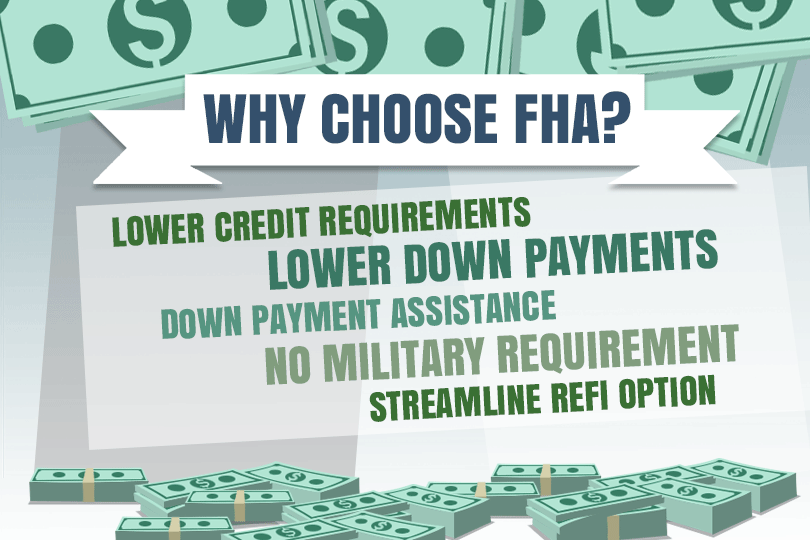
One option for financing your home is an FHA loan. These mortgages are insured by the Federal Housing Administration (FHA), a government agency committed to stimulating the American housing market, and create ways for people of all income levels to gain access to safe and affordable housing.
In addition to offering competitive interest rates, there are a number of reasons why FHA loans are one of the most popular loan types of mortgages for many first-time homebuyers as well as repeat buyers with lower credit scores.
Flexible Down Payment and Credit Score Requirements
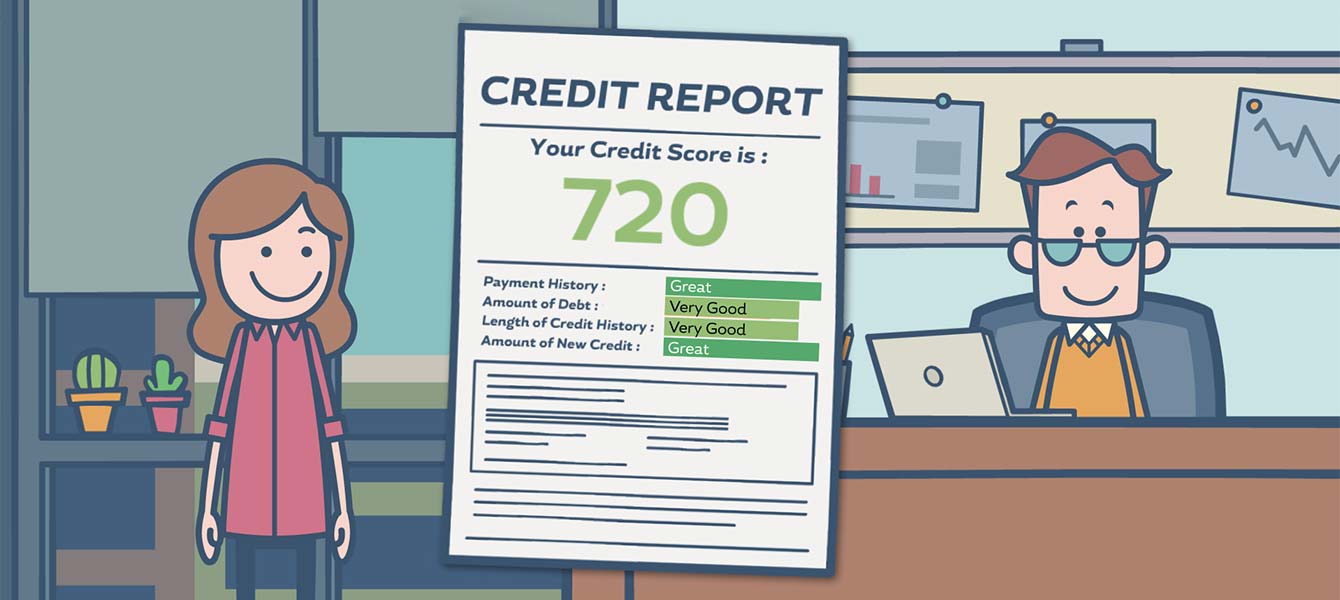
FHA loans are designed with first-time homebuyers in mind; younger borrowers who haven’t achieved a high credit score yet, and probably don’t have enough savings for a large down payment. With this in mind, the FHA requires a down payment as low as 3.5% combined with a credit score of 580 or more to qualify for home loans, which is quite lower than the 620 minimum score and 20% down payment that is typically required by conventional lenders.
In the case of borrowers with even lower scores, the FHA allows a minimum score of 500 if the applicant can put up 10% toward the down payment. This is especially beneficial for borrowers who have suffered bankruptcy or foreclosure, which would preclude them from qualifying for conventional home loans.
More Housing Options
The FHA’s aim is to expand housing opportunities for Americans, which is why FHA loans are suitable to finance various different property types. FHA loans can be used to buy single-family homes, multi-family homes with up to four units, manufactured homes on permanent foundations, and even condominiums.
Open to All Income Levels
While conventional lenders can have set income limits to qualify for loans, there is no minimum or maximum income limit for FHA loans. Borrowers do not need a qualifying income, but they must show proof of employment, have at least two established credit accounts.
Cheaper Mortgage Insurance
Many conventional lenders charge expensive Private Mortgage Insurance to borrowers with lower than necessary credit scores who cannot afford a 20% down payment. You can avoid this higher cost with an FHA loan, which requires the same Mortgage Insurance Premium, regardless of your credit score.
Gift Funds Are Permitted
Even with a low, down payment requirement, the FHA allows the money to be sourced with “gifts,” which are funds not earned directly by the borrowers. This can include money from friends, family, a charity, employers, unions, or state and local government agencies, as long as the gifts are verified in writing by the donor.
Non-Occupying Co-Signers
This is another advantage for first-time homebuyers with insufficient credit histories. While there are some restrictions, the FHA loans allow applicants to have a co-signer on the loan who does not plan to live on the property. This can be someone (such as a parent) with more established creditworthiness whose income and assets can be used to support the loan.
The FHA loan has many features that appeal to a vast number of borrowers, but it’s best to consider all your options. Read up on the different mortgage types, and talk to your loan officer to see what the best move is for you!
------------------------------
RELATED VIDEOS:
Understand the Reasons for Private Mortgage Insurance
Carefully Read Your Closing Disclosure
Buying a Home With a Co-Borrower
FHA Loan Articles
August 19, 2026Homebuyers who have enough cash for a down payment still need to consider their full financial picture before choosing between a conventional mortgage and an FHA loan. Having cash on hand changes the math for both options, but savings alone won't make a conventional loan the automatic winner. Credit scores, current debt, and the type of property you want to buy all determine which loan will cost less over time.
August 11, 2026Homeowners with FHA adjustable-rate loans need to track their loans more closely. That is because FHA ARM loans start with introductory interest rates that eventually expire and are subject to change afterwards based on market rates. When interest rates rise, monthly housing payments climb on ARM loans, pushing many homeowners to consider refinancing into a fixed-rate mortgage.
August 10, 2026If you want to buy a home with an FHA mortgage, you must set up an escrow account to cover property taxes, homeowner insurance, and upfront closing expenses. While the FHA loan program has rules for funding these accounts, buyers often do not realize those rules can include approved and unallowed sources for escrow funds. What do you need to know before you set up and fund your escrow account for an FHA mortgage?
August 3, 2026Buying a home in a high-cost area requires understanding how FHA loan limits shape your financing options. Does the house for sale have a price above the local FHA loan limit? You may need to explore your jumbo loan options. There are conventional jumbo loans and FHA versions. Which is right for you? Much depends on your financial needs, plans, and goals for the loan.
July 30, 2026There is a common misconception about FHA loans that only a first-time home buyer can use the program. This is not true; repeat buyers can qualify for an FHA loan, but why does this misconception exist? Partially because state and local programs have first-time buyer requirements for down payment and/or closing cost assistance programs. So while you do not need to be a first-time buyer to get an FHA loan, you may need to meet that definition to qualify for down payment help.