





Why Your Current Debt Load Matters to Your FHA Lender
May 19, 2026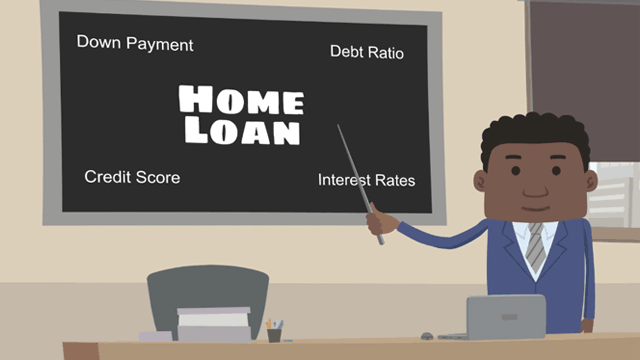
Every dollar committed to outside creditors is legally unavailable for your housing expense, so carrying high debt may affect loan approval.
Why Lenders View Debt as an Indicator of Default Risk
Your participating FHA lender measures how well you can handle a monthly mortgage in addition to other financial commitments. An applicant with zero vehicular or revolving debt can, in theory, use their net earnings to protect the mortgage during economic instability.
Conversely, a consumer with multiple financing agreements faces competing fiscal pressures and may be forced to choose between making a mortgage payment and paying for other debts instead.
Differences Between Front-End and Back-End Debt-to-Income Ratios
The evaluation relies on two separate percentage calculations to measure risk. The front-end ratio compares the proposed housing payment to your monthly pay.
The back-end ratio measures your total financial footprint by combining your proposed housing payment with all active monthly liabilities relative to your gross earnings.
While the front-end calculation focuses on home expenses, your other financial obligations are used for calculating the back-end. If large car payments or credit card balances push the back-end past federal limits, the loan file may be flagged for a manual review and may not be approved automatically.
Your Installment Debt
Fixed installment obligations, such as personal or automotive loans, are assessed based on the payments reported by the credit bureaus.
If an account has 10 or fewer remaining payments, the underwriter can choose to omit the liability, though an exceptionally large near-term payment will still be counted because it drains the immediate cash reserves a new homeowner needs.
Revolving credit cards introduce risk. Why? Because spending habits fluctuate. FHA lenders must use the mandatory minimum payment listed on the statement.
If the credit profile fails to show a minimum payment, the lender applies a standard percentage formula. Federal rules prohibit lenders from using a zero-dollar figure for deferred or income-driven student accounts, and if your credit profile displays a zero-dollar payment, the underwriter is required to calculate a realistic monthly obligation.
FHA Loan Articles
August 19, 2026Homebuyers who have enough cash for a down payment still need to consider their full financial picture before choosing between a conventional mortgage and an FHA loan. Having cash on hand changes the math for both options, but savings alone won't make a conventional loan the automatic winner. Credit scores, current debt, and the type of property you want to buy all determine which loan will cost less over time.
August 11, 2026Homeowners with FHA adjustable-rate loans need to track their loans more closely. That is because FHA ARM loans start with introductory interest rates that eventually expire and are subject to change afterwards based on market rates. When interest rates rise, monthly housing payments climb on ARM loans, pushing many homeowners to consider refinancing into a fixed-rate mortgage.
August 10, 2026If you want to buy a home with an FHA mortgage, you must set up an escrow account to cover property taxes, homeowner insurance, and upfront closing expenses. While the FHA loan program has rules for funding these accounts, buyers often do not realize those rules can include approved and unallowed sources for escrow funds. What do you need to know before you set up and fund your escrow account for an FHA mortgage?
August 3, 2026Buying a home in a high-cost area requires understanding how FHA loan limits shape your financing options. Does the house for sale have a price above the local FHA loan limit? You may need to explore your jumbo loan options. There are conventional jumbo loans and FHA versions. Which is right for you? Much depends on your financial needs, plans, and goals for the loan.
July 30, 2026There is a common misconception about FHA loans that only a first-time home buyer can use the program. This is not true; repeat buyers can qualify for an FHA loan, but why does this misconception exist? Partially because state and local programs have first-time buyer requirements for down payment and/or closing cost assistance programs. So while you do not need to be a first-time buyer to get an FHA loan, you may need to meet that definition to qualify for down payment help.