





Getting to Know Credit Bureaus Before You Apply for an FHA Mortgage
March 24, 2026
The roles of the three major credit bureaus and the evolution of credit scoring models are important to those buying a home, especially first-time home buyers. Knowing how credit bureaus work can help you better plan your home loan while you are still working on your credit and saving for your down payment.
Credit bureaus are not part of the federal government.
Equifax, Experian, and TransUnion are independent, publicly traded corporations. Although they are central to the American financial system, they operate as private businesses with multi-billion-dollar valuations rather than government agencies.
How Credit Bureaus obtain information about your financial habits.
The bureaus act as repositories for data provided by "furnishers." These include credit card issuers, student loan providers, and auto lenders. Because reporting is voluntary, a lender might send data to one bureau but not the others, which often leads to discrepancies between your different credit files.
What FHA lenders review during the application process.
Lenders typically pull a tri-merge credit report. This report provides a comprehensive overview by simultaneously pulling and consolidating data from all three major bureaus. It ensures the lender sees a complete picture of your credit history across the entire industry.
Credit scores an FHA lender uses if the three bureaus report different numbers.
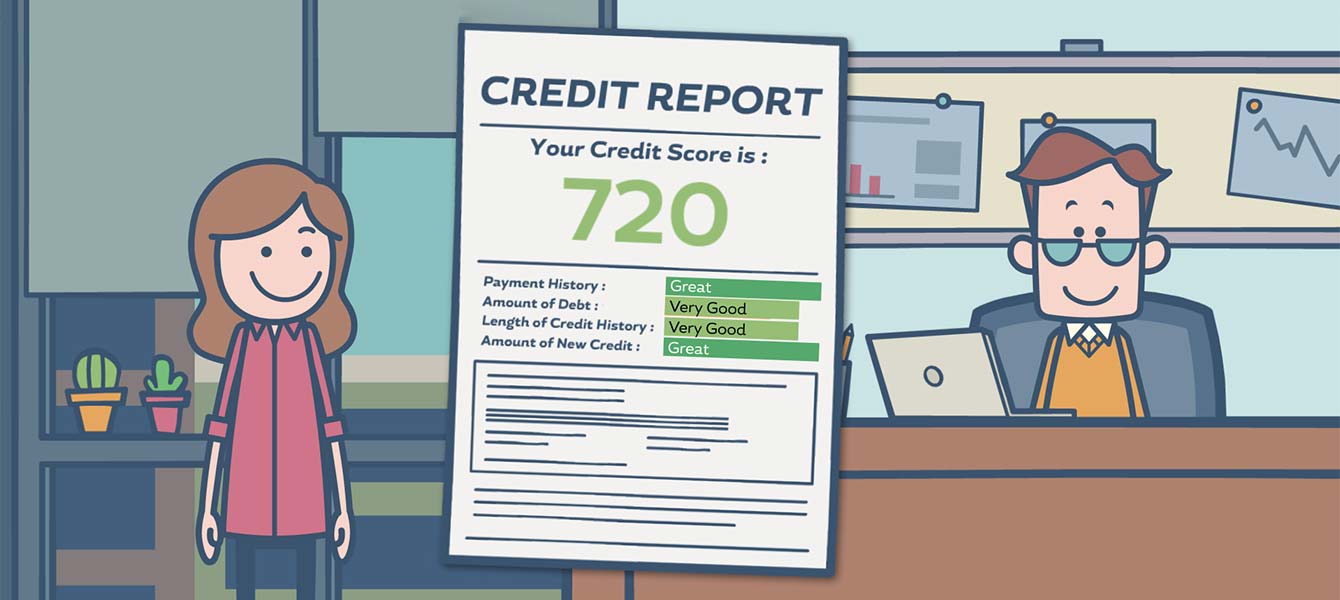
Lenders generally rely on the middle score. For an applicant with scores of 620, 640, and 650, the qualifying score would be 640. In cases involving a co-borrower, the lender typically identifies the middle score for each person and then uses the lower of those two figures to evaluate the loan.
What is the difference between a credit bureau and FICO?
The bureaus are the libraries that store your data, while FICO is the mathematician who analyzes it. The Fair Isaac Corporation develops the proprietary algorithms used to estimate the likelihood that a borrower will fall 90 days behind on payments. Their "Classic FICO" model has served as the industry standard for nearly three decades.
How the mortgage industry updated its scoring methods in 2026.
The market is currently transitioning to more inclusive models like VantageScore 4.0 and FICO 10T. This shift is meant to help first-time buyers who have limited credit histories. Unlike older versions, these models can factor in "alternative" data, such as a consistent record of paying rent, phone bills, and utilities.
What is "trended data" and why does it matter for a home loan?
Trended data is a feature of the newest scoring models that looks at the trajectory of your debt over time. Instead of viewing a single snapshot of your current balances, the system analyzes whether your debt is shrinking or growing. This provides a more accurate reflection of your financial trajectory and management habits.
How does VantageScore differ from the FICO model?
While FICO is an independent company, VantageScore was developed as a joint venture among Equifax, Experian, and TransUnion. Both companies now compete to provide the scoring formulas used in the FHA mortgage process.
FHA Loan Articles
August 19, 2026Homebuyers who have enough cash for a down payment still need to consider their full financial picture before choosing between a conventional mortgage and an FHA loan. Having cash on hand changes the math for both options, but savings alone won't make a conventional loan the automatic winner. Credit scores, current debt, and the type of property you want to buy all determine which loan will cost less over time.
August 11, 2026Homeowners with FHA adjustable-rate loans need to track their loans more closely. That is because FHA ARM loans start with introductory interest rates that eventually expire and are subject to change afterwards based on market rates. When interest rates rise, monthly housing payments climb on ARM loans, pushing many homeowners to consider refinancing into a fixed-rate mortgage.
August 10, 2026If you want to buy a home with an FHA mortgage, you must set up an escrow account to cover property taxes, homeowner insurance, and upfront closing expenses. While the FHA loan program has rules for funding these accounts, buyers often do not realize those rules can include approved and unallowed sources for escrow funds. What do you need to know before you set up and fund your escrow account for an FHA mortgage?
August 3, 2026Buying a home in a high-cost area requires understanding how FHA loan limits shape your financing options. Does the house for sale have a price above the local FHA loan limit? You may need to explore your jumbo loan options. There are conventional jumbo loans and FHA versions. Which is right for you? Much depends on your financial needs, plans, and goals for the loan.
July 30, 2026There is a common misconception about FHA loans that only a first-time home buyer can use the program. This is not true; repeat buyers can qualify for an FHA loan, but why does this misconception exist? Partially because state and local programs have first-time buyer requirements for down payment and/or closing cost assistance programs. So while you do not need to be a first-time buyer to get an FHA loan, you may need to meet that definition to qualify for down payment help.