




What it Takes to Get Your FHA Loan Approved
November 17, 2025
The Federal Housing Administration insures these loans for participating lenders, allowing them to offer mortgages to borrowers who need more flexible credit and lower down payment requirements. The lender, not the FHA, makes the final credit decision.
Loan Limits and Lender Overlays
The FHA sets maximum loan limits that vary by county. You cannot borrow more than the FHA limit for your area without applying for a jumbo loan, which is typically harder to qualify for compared to a conforming FHA mortgage.
Loan approval depends on your loan meeting the lender's standards in this area.
Lenders may also impose their own rules, known as "overlays."
These are stricter guidelines than the FHA's minimum requirements. For example, the FHA may allow a credit score of 580, but a lender's overlay might require a score of 620. This is why you must check the specific requirements of the lender you choose.
The final approval rests with the lender's underwriter, who reviews your complete file to ensure it meets both FHA and lender standards.
Credit and Debt Requirements
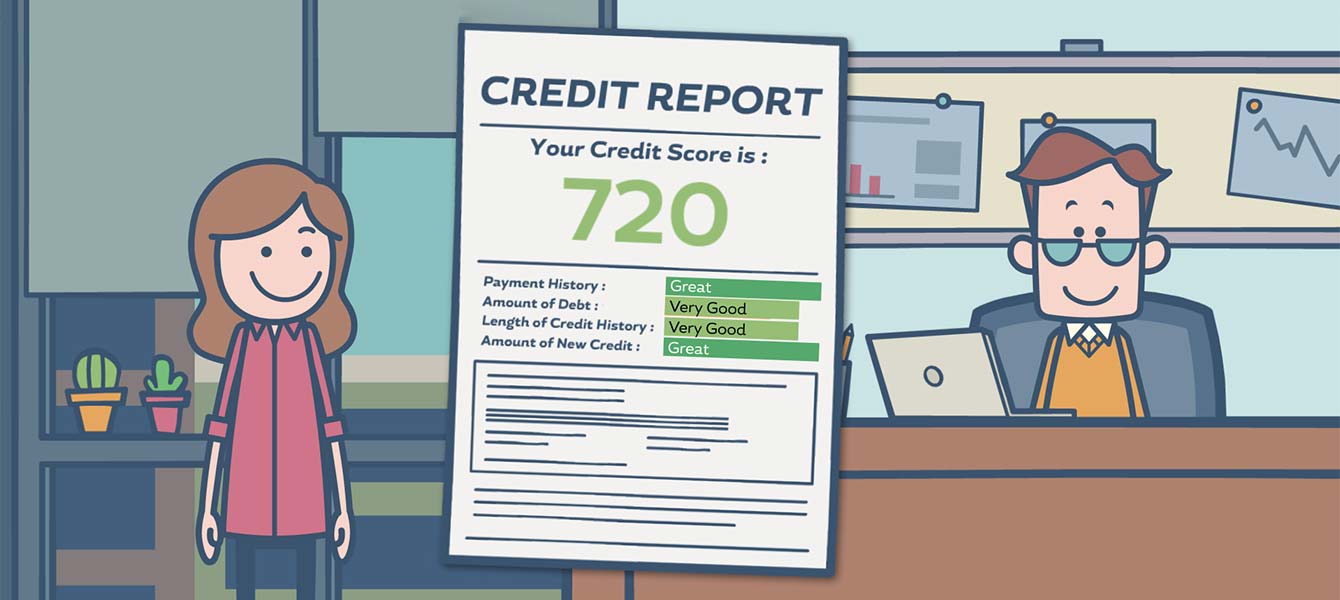
Your credit history is the first item a lender will scrutinize. The FHA establishes minimum credit score guidelines for its programs.
To qualify for the 3.5% down payment, you need a credit score of 580 or higher. If your credit score is between 500 and 579, you may still be approved, but you will be required to provide a 10% down payment.
Lenders look beyond the score. They will review your full credit report for late payments, collections, or past bankruptcies. Lenders also analyze your debt-to-income ratio (DTI).
This ratio compares a person's monthly income to their monthly debt. FHA guidelines generally require a housing expense ratio (front-end) of 31% or less and a total debt ratio (back-end) of 43% or less.
Your total monthly debts, including the new mortgage payment, should generally not exceed 43% of your income. Lenders may approve higher ratios if you have compensating factors, such as significant cash reserves or a history of saving.
Income and Employment Verification
You must have a stable and reliable income. Lenders must verify that your income is likely to continue for at least the next three years. You will provide documents to prove your earnings.
These include recent pay stubs, W-2 forms for the past two years, and federal tax returns.
Gaps in employment must be explained. For self-employed borrowers, the requirements are more extensive. You must provide at least two years of tax returns, along with a profit-and-loss-statement, to prove your income is stable.
Down Payment and Cash to Close
The FHA requires a down payment of 3.5% of the home's purchase price for borrowers with a credit score of 580 or higher.
FHA allows the down payment to be sourced from gift funds. A relative or employer can provide this money. If you use gift funds, you must provide a signed letter from the donor. This letter must state that the money is a gift, not a loan.
You also need cash for closing costs. These costs are in addition to the down payment. They cover fees for the appraisal, title search, and other loan processing expenses.
FHA Appraisal and Property Standards
The FHA requires every property to undergo an FHA appraisal. This is not the same as a standard home inspection. The appraiser confirms the home's value and also reviews its general condition.
The appraiser checks for any issues that affect the home's safety, security, or structural soundness.
This includes problems like a bad roof, peeling paint in homes built before 1978, or a non-functional heating system. If the appraiser identifies required repairs, the seller must complete them before the loan can close.
The FHA loan must also be used for your primary residence; it cannot be used to purchase an investment property or a vacation home.
Mortgage Insurance Premiums (MIP)
All FHA loans require Mortgage Insurance Premiums (MIP) to protect the lender in case you default on the FHA loan. You pay this in two parts. First, you pay an Upfront Mortgage Insurance Premium (UFMIP). This is a one-time charge, currently 1.75% of the loan amount.
Most borrowers roll this cost into their total mortgage balance. Second, you pay an annual MIP, which is collected in monthly installments as part of your mortgage payment.
If you put down less than 10%, you will likely pay this monthly MIP for the entire life of the loan
FHA Loan Articles
August 19, 2026Homebuyers who have enough cash for a down payment still need to consider their full financial picture before choosing between a conventional mortgage and an FHA loan. Having cash on hand changes the math for both options, but savings alone won't make a conventional loan the automatic winner. Credit scores, current debt, and the type of property you want to buy all determine which loan will cost less over time.
August 11, 2026Homeowners with FHA adjustable-rate loans need to track their loans more closely. That is because FHA ARM loans start with introductory interest rates that eventually expire and are subject to change afterwards based on market rates. When interest rates rise, monthly housing payments climb on ARM loans, pushing many homeowners to consider refinancing into a fixed-rate mortgage.
August 10, 2026If you want to buy a home with an FHA mortgage, you must set up an escrow account to cover property taxes, homeowner insurance, and upfront closing expenses. While the FHA loan program has rules for funding these accounts, buyers often do not realize those rules can include approved and unallowed sources for escrow funds. What do you need to know before you set up and fund your escrow account for an FHA mortgage?
August 3, 2026Buying a home in a high-cost area requires understanding how FHA loan limits shape your financing options. Does the house for sale have a price above the local FHA loan limit? You may need to explore your jumbo loan options. There are conventional jumbo loans and FHA versions. Which is right for you? Much depends on your financial needs, plans, and goals for the loan.
July 30, 2026There is a common misconception about FHA loans that only a first-time home buyer can use the program. This is not true; repeat buyers can qualify for an FHA loan, but why does this misconception exist? Partially because state and local programs have first-time buyer requirements for down payment and/or closing cost assistance programs. So while you do not need to be a first-time buyer to get an FHA loan, you may need to meet that definition to qualify for down payment help.