





FHA Loans and the "Appraisal Gap"
June 12, 2025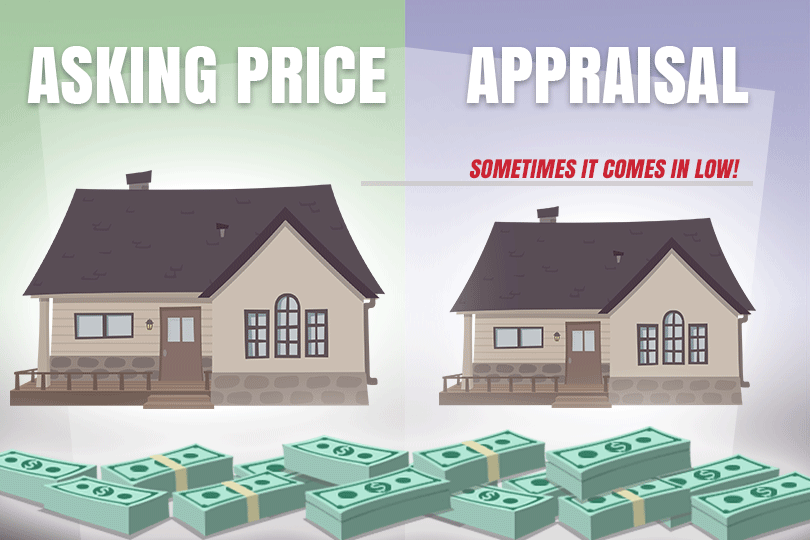
For example, a buyer might agree to purchase a home for $325,000, but the appraiser, an independent third party hired by the lender, determines the fair market value is only $310,000.
This is where the "appraisal gap" factors in. The market value does not match the appraised value of the home; there is a $15,000 gap. This can be a big problem since the FHA lender will only issue a loan based on the appraised value or the purchase price. The lower amount is what the loan amount will be set at.
In this example, the lender will only finance a percentage of the $310,000 appraised value. The buyer cannot borrow the additional $15,000 for the mortgage. That money must be paid in cash at closing time.
This leaves the buyer with a few options. The first is to try to renegotiate the price with the seller.
The success or failure of that may depend on whether you're buying in a competitive housing market or not. A seller might be willing to lower the price in a buyer's market.
However, in a seller's market, where multiple offers are common, the seller has little incentive to do so. They may move on to the next offer. That leaves some borrowers in a bad spot, and it may be wise to move on to the next sale home if the seller won't negotiate.
The second option is for the buyer to cover the gap with in cash. In our example, the buyer would need to bring an additional $15,000 to closing on top of their down payment and closing costs.
Doing so is a major financial strain and may not be possible for all buyers. It means the buyer pays more than the home's professionally assessed value. Whether or not that's a long-term problem depends greatly on individual circumstances.
A third option is to walk away from the deal. FHA home loans to purchase existing construction come with an appraisal contingency, which allows the buyer to back out of the contract without penalty if the home does not appraise for the purchase price.
While this protects the buyer's earnest money, it means they have lost the money spent on the inspection and appraisal and are back to square one in their home search. But you won't be forced into a deal you don't want, and for many borrowers, that peace of mind is worth the disappointment of walking away if needed.
FHA Loan Articles
August 19, 2026Homebuyers who have enough cash for a down payment still need to consider their full financial picture before choosing between a conventional mortgage and an FHA loan. Having cash on hand changes the math for both options, but savings alone won't make a conventional loan the automatic winner. Credit scores, current debt, and the type of property you want to buy all determine which loan will cost less over time.
August 11, 2026Homeowners with FHA adjustable-rate loans need to track their loans more closely. That is because FHA ARM loans start with introductory interest rates that eventually expire and are subject to change afterwards based on market rates. When interest rates rise, monthly housing payments climb on ARM loans, pushing many homeowners to consider refinancing into a fixed-rate mortgage.
August 10, 2026If you want to buy a home with an FHA mortgage, you must set up an escrow account to cover property taxes, homeowner insurance, and upfront closing expenses. While the FHA loan program has rules for funding these accounts, buyers often do not realize those rules can include approved and unallowed sources for escrow funds. What do you need to know before you set up and fund your escrow account for an FHA mortgage?
August 3, 2026Buying a home in a high-cost area requires understanding how FHA loan limits shape your financing options. Does the house for sale have a price above the local FHA loan limit? You may need to explore your jumbo loan options. There are conventional jumbo loans and FHA versions. Which is right for you? Much depends on your financial needs, plans, and goals for the loan.
July 30, 2026There is a common misconception about FHA loans that only a first-time home buyer can use the program. This is not true; repeat buyers can qualify for an FHA loan, but why does this misconception exist? Partially because state and local programs have first-time buyer requirements for down payment and/or closing cost assistance programs. So while you do not need to be a first-time buyer to get an FHA loan, you may need to meet that definition to qualify for down payment help.